Children's Worries By Age
Children experience fears and worries differently at every stage of development. This beautifully designed printable guide helps parents and professionals understand what worries may be common at different ages—and, most importantly, how to respond with connection, validation, and developmentally appropriate support.
This 9-page printable PDF includes:
🌱 Developmental Overview
Understand how children's worries can change from early childhood through adolescence.
👧 Ages 2–4
Common fears, what caregivers may notice, and supportive responses.
🎒 Ages 5–7
School worries, friendships, separation, perfectionism, and more.
🧸 Ages 8–10
Peer relationships, school performance, comparison, safety, and growing independence.
💬 Ages 11–14
Social evaluation, friendships, body changes, independence, and emotional development.
🌈 Ages 15–18
Identity, relationships, future planning, social expectations, and increasing independence.
💛 A Supportive Response Guide
Practical strategies for connecting, validating, getting curious, building coping skills, and encouraging children without dismissing their worries.
🚩 When to Seek Additional Support
Helpful guidance for recognizing when worry may be interfering with a child's daily functioning or well-being.
💡 Perfect For
Parents & caregivers
Child therapists and counselors
Social workers
School counselors
Teachers & educators
Play therapists
Clinical supervisors
Child-serving professionals
Parenting educators
Mental health practices
Therapy offices and waiting rooms
🖨️ Digital Printable
Instant digital download — no physical product will be shipped.
The PDF is designed for easy home, classroom, office, or professional printing. Each resource page can be printed individually, making it easy to use only the page you need.
💚 Why You'll Love It
Rather than simply telling children “don't worry,” this resource encourages adults to understand the developmental meaning behind children's worries and respond in ways that promote safety, connection, coping skills, and confidence.
Children do not have to be completely free of worry to learn that they can handle it.
Created by Ethos Learning Institute
Learn • Grow • Connect
IMPORTANT INFORMATION
This resource is intended for educational purposes and is not a replacement for individualized medical, psychological, or mental-health treatment. Please consult an appropriately qualified professional when you have concerns about a child’s development, safety, or emotional well-being.
PERSONAL-USE LICENSE
Your purchase is for personal or single-practice use by the original purchaser. You may print copies for your household or for your own clients, students, or workshop participants. The digital file may not be shared, resold, redistributed, altered for resale, or uploaded to another website.
Children experience fears and worries differently at every stage of development. This beautifully designed printable guide helps parents and professionals understand what worries may be common at different ages—and, most importantly, how to respond with connection, validation, and developmentally appropriate support.
This 9-page printable PDF includes:
🌱 Developmental Overview
Understand how children's worries can change from early childhood through adolescence.
👧 Ages 2–4
Common fears, what caregivers may notice, and supportive responses.
🎒 Ages 5–7
School worries, friendships, separation, perfectionism, and more.
🧸 Ages 8–10
Peer relationships, school performance, comparison, safety, and growing independence.
💬 Ages 11–14
Social evaluation, friendships, body changes, independence, and emotional development.
🌈 Ages 15–18
Identity, relationships, future planning, social expectations, and increasing independence.
💛 A Supportive Response Guide
Practical strategies for connecting, validating, getting curious, building coping skills, and encouraging children without dismissing their worries.
🚩 When to Seek Additional Support
Helpful guidance for recognizing when worry may be interfering with a child's daily functioning or well-being.
💡 Perfect For
Parents & caregivers
Child therapists and counselors
Social workers
School counselors
Teachers & educators
Play therapists
Clinical supervisors
Child-serving professionals
Parenting educators
Mental health practices
Therapy offices and waiting rooms
🖨️ Digital Printable
Instant digital download — no physical product will be shipped.
The PDF is designed for easy home, classroom, office, or professional printing. Each resource page can be printed individually, making it easy to use only the page you need.
💚 Why You'll Love It
Rather than simply telling children “don't worry,” this resource encourages adults to understand the developmental meaning behind children's worries and respond in ways that promote safety, connection, coping skills, and confidence.
Children do not have to be completely free of worry to learn that they can handle it.
Created by Ethos Learning Institute
Learn • Grow • Connect
IMPORTANT INFORMATION
This resource is intended for educational purposes and is not a replacement for individualized medical, psychological, or mental-health treatment. Please consult an appropriately qualified professional when you have concerns about a child’s development, safety, or emotional well-being.
PERSONAL-USE LICENSE
Your purchase is for personal or single-practice use by the original purchaser. You may print copies for your household or for your own clients, students, or workshop participants. The digital file may not be shared, resold, redistributed, altered for resale, or uploaded to another website.
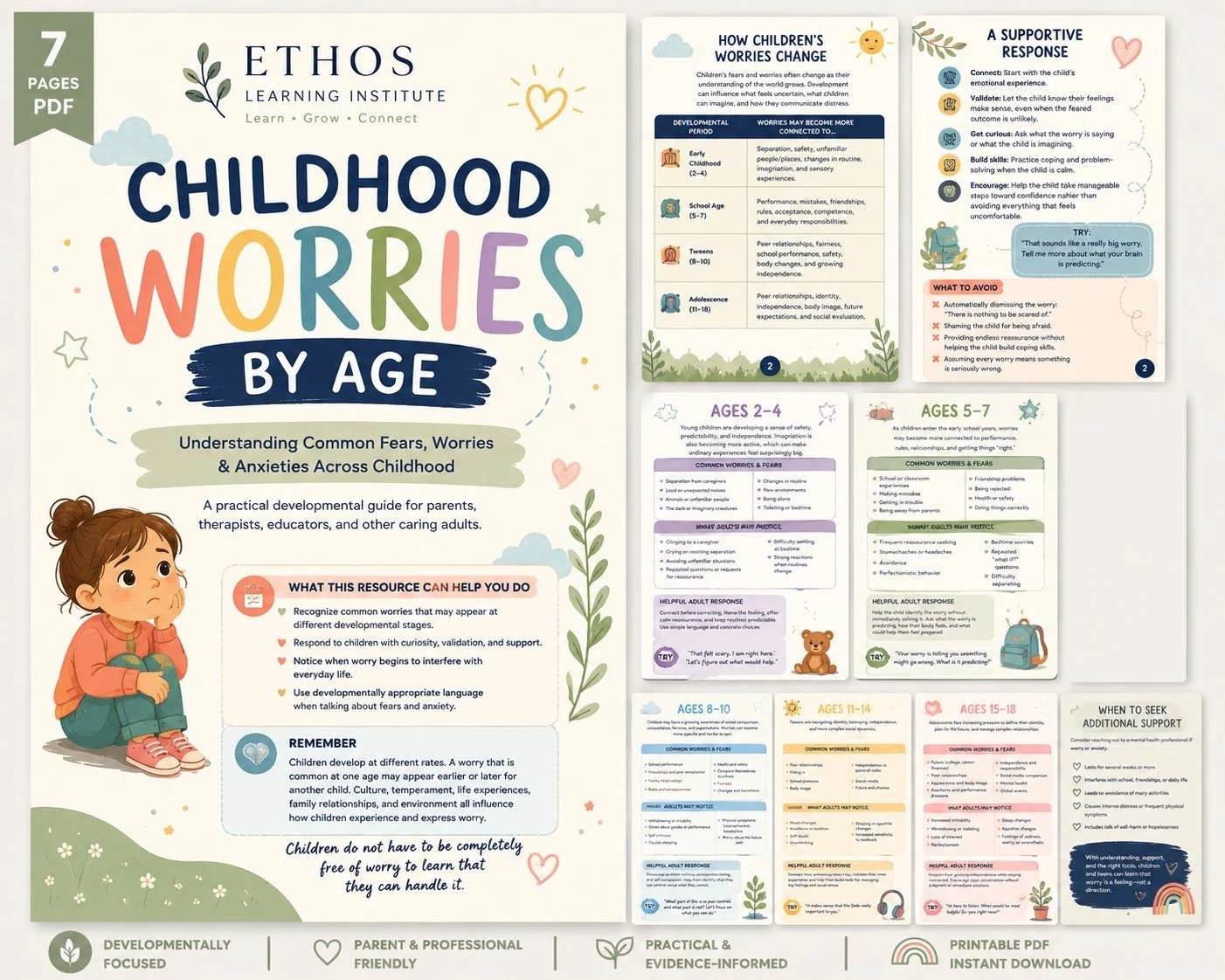 Image 1 of 4
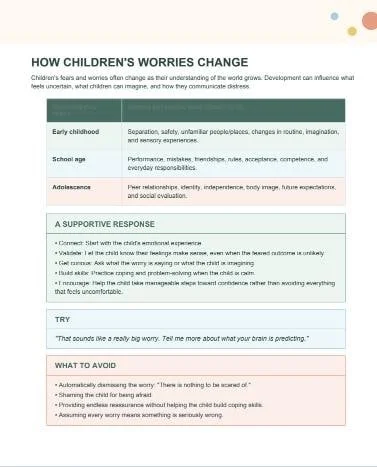 Image 2 of 4
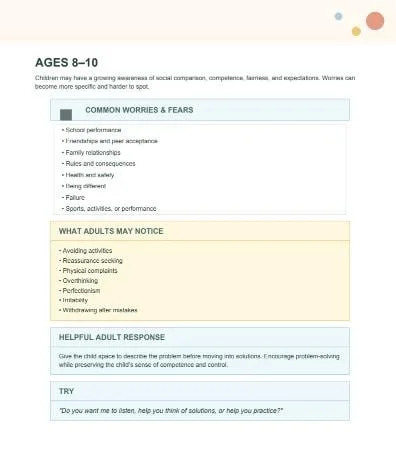 Image 3 of 4
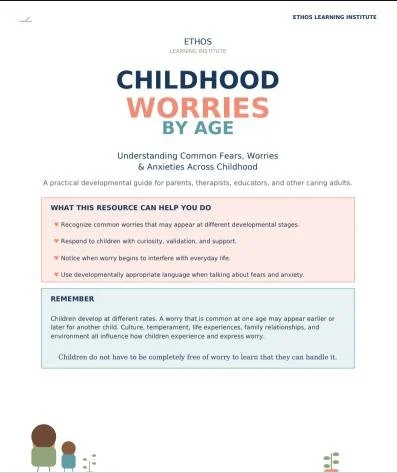 Image 4 of 4